Patterns Meet Textures When Knitwear Pairs With Lightweight Fabrics
Written by Alex Jung · Nov 21, 2026
Patterns Meet Textures When Knitwear Pairs With Lightweight Fabrics
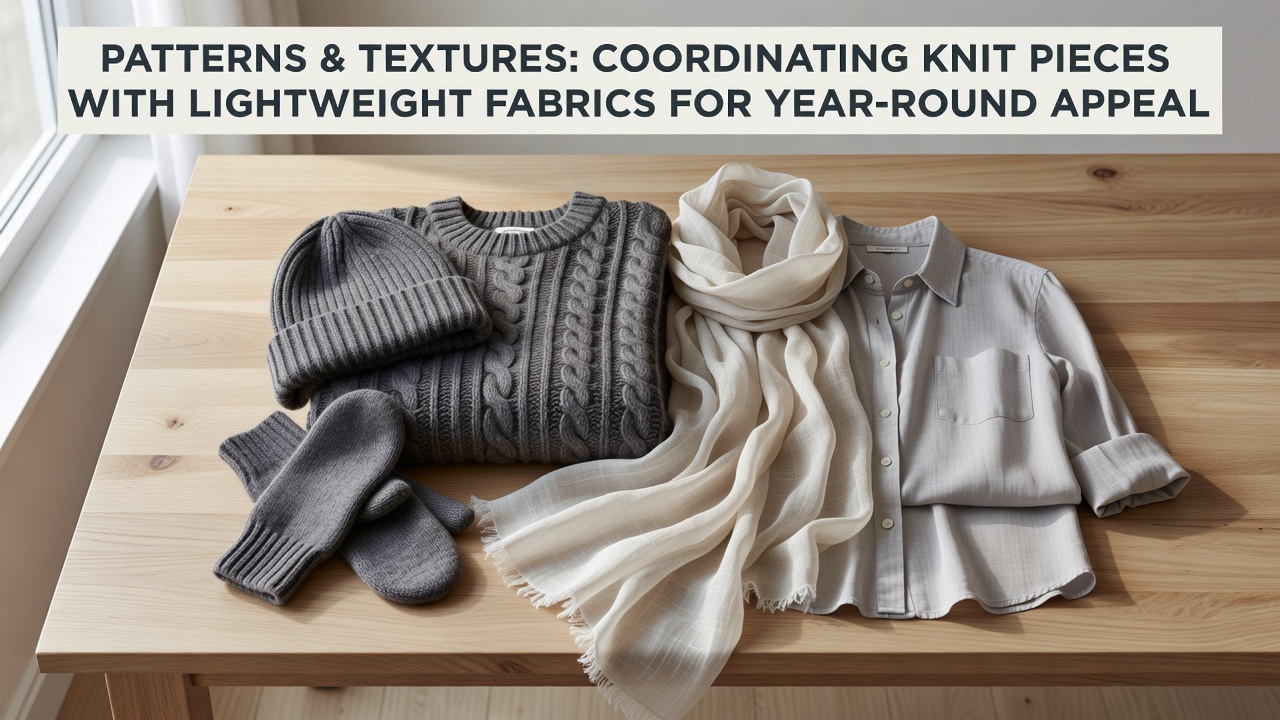
Knit pieces bring depth through varied stitches and yarn weights while lightweight fabrics such as linen, voile, and silk add drape and breathability, and together they create outfits that transition across temperature changes without requiring seasonal overhauls. Observers note that cable knits, ribbed textures, and open-weave constructions combine readily with printed cottons or sheer overlays because the contrast in surface feel prevents visual monotony and allows air circulation even when layers stack.
Research from the Textile Exchange shows that natural fiber knits retain shape better when paired with garments cut from fabrics under 120 grams per square meter, since the lighter cloth reduces friction and allows movement that keeps heavier yarns from stretching out of form. As November 2026 nears, retailers report increased interest in modular wardrobes where one knit cardigan works equally well over a sleeveless linen shift in early autumn and beneath a silk blouse once indoor heating rises.
Recognizing Compatible Patterns and Surface Finishes
Geometric jacquards in knits align with subtle stripes in lightweight cottons because both rely on regular repeats that create rhythm without competition, whereas floral embroidery on a fine lawn top complements the matte finish of a wool blend crewneck by introducing organic lines against structured stitches. Those who study textile interactions point out that scale matters: small-scale patterns in both layers maintain balance, while one oversized motif against a finer ground draws attention to specific areas such as sleeves or necklines.
Industry figures from the European Apparel and Textile Confederation reveal that mixed-texture ensembles appear in 38 percent of collections shown during transitional market weeks, reflecting demand for pieces that function across multiple climates. A cable-knit vest worn over a printed georgette blouse illustrates the principle because the raised knit surface catches light differently from the fluid fabric beneath, producing dimension that changes with movement.
Layering Techniques That Preserve Comfort Year-Round
Lightweight fabrics serve as effective buffers when placed directly against skin, allowing knit outer layers to sit away from the body and reduce overheating. Button-front shirts cut from crisp poplin slide beneath crewneck sweaters without bulk because the smooth cotton surface creates minimal drag, and the same shirt reverses to act as an outer layer when a fine-gauge merino tank provides the base texture. Observers note that tucking only the front of a lightweight tunic into high-waisted trousers while leaving a chunky knit cardigan open maintains proportion and prevents the heavier garment from overwhelming the silhouette.
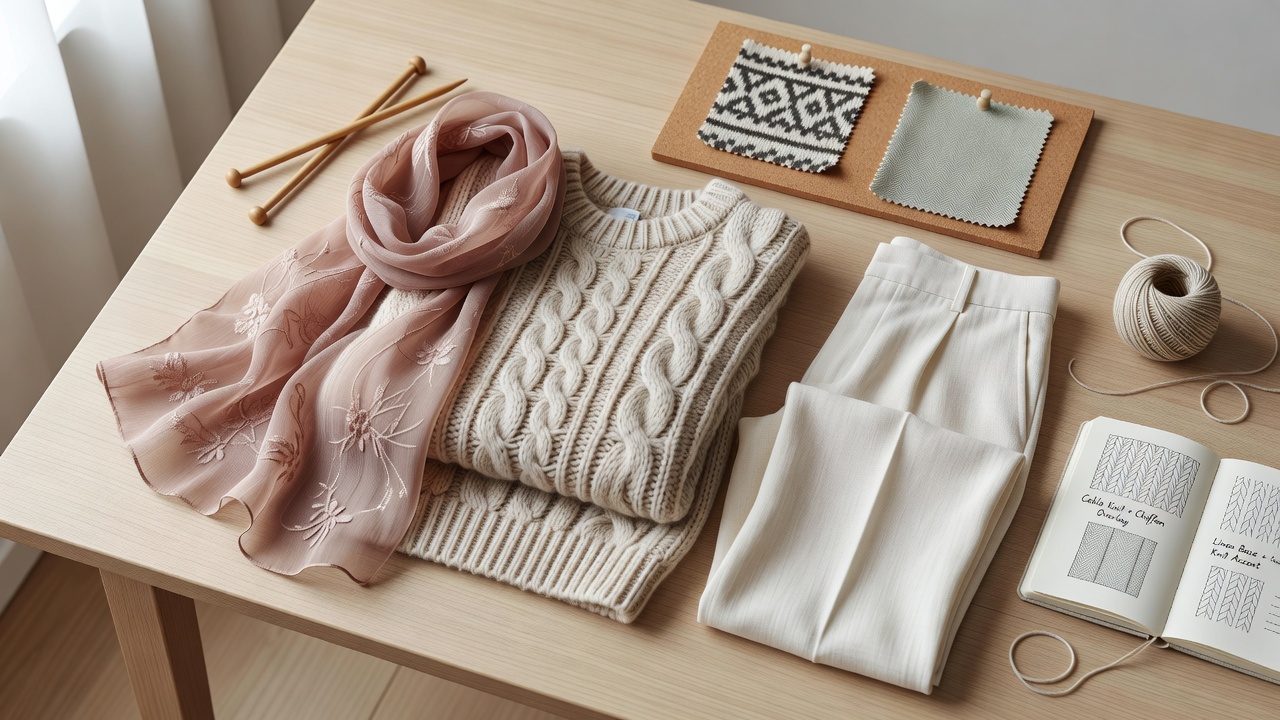
Half-tucking methods work particularly well with peplum-style knits because the flare of the hem echoes the movement of an underlying chiffon skirt. Data from university textile laboratories indicate that friction between cotton and wool remains low when both fabrics receive similar finishing processes, which explains why pre-washed linen shirts pair reliably with felted wool pieces without pilling at contact points.
Adapting Combinations for Different Climates and Occasions
In warmer regions, open-stitch knits such as pointelle or mesh replace denser Aran styles, allowing the lightweight fabric underneath to show through and create visual interest while still providing modest coverage for air-conditioned spaces. A longline linen duster worn over a cropped knit top demonstrates how the same pieces shift from daytime professional settings to evening events simply by changing accessories rather than entire garments. Studies conducted by the Sustainable Apparel Coalition document that consumers who invest in versatile texture pairings reduce overall wardrobe volume by an average of 22 percent because each item serves multiple functions across months.
Print direction offers another coordination tool: vertical stripes in a lightweight fabric elongate the figure beneath a horizontally ribbed knit, counteracting any shortening effect from the denser texture. Those who examine retail analytics note that color continuity between layers strengthens cohesion, with tonal variations within the same hue family allowing pattern play without clashing.
Conclusion
Coordinating knit pieces with lightweight fabrics succeeds when attention stays on scale, surface contrast, and fiber compatibility rather than strict seasonal rules. The approach supports wardrobes that adapt through temperature shifts because the same foundational items serve multiple contexts when textures and patterns receive thoughtful arrangement. Evidence from multiple textile research bodies confirms that such combinations deliver both practical comfort and visual variety across extended periods of wear.